Designing LLM-Powered Assistants: Architecture Patterns
Introduction
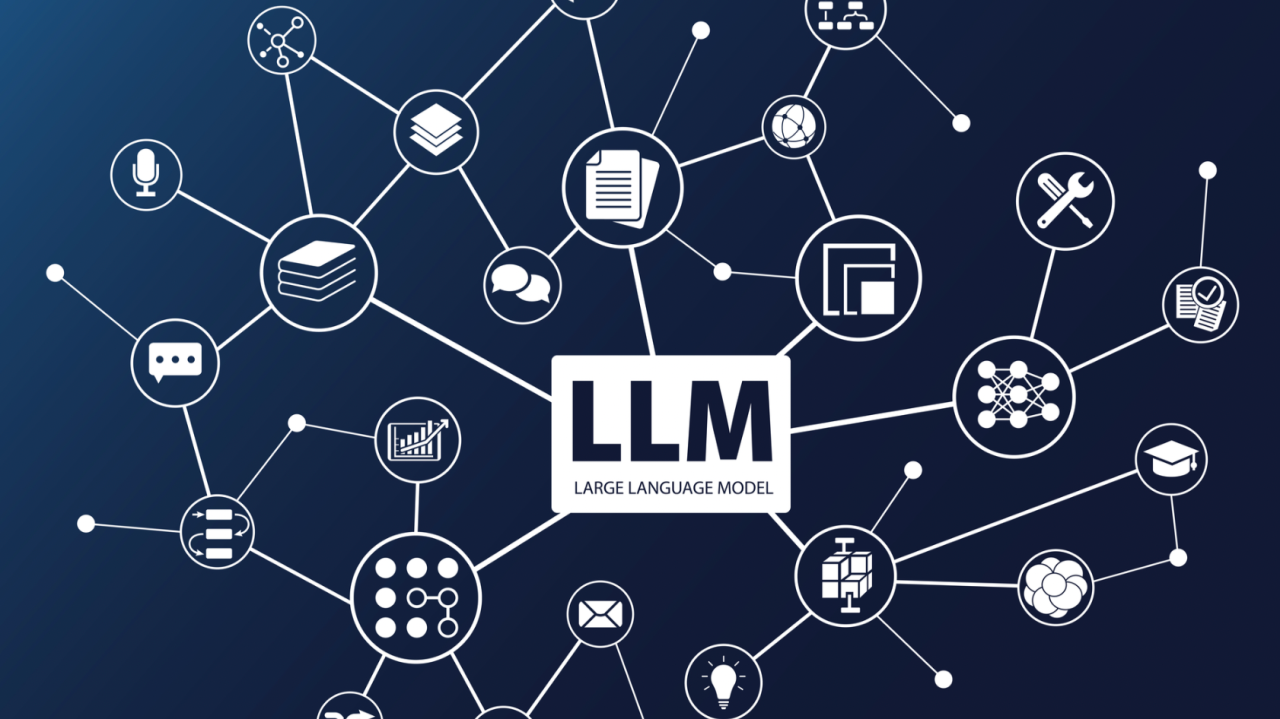
Large Language Models (LLMs) have moved from research curiosity to production necessity. But integrating an LLM into a real application requires more than an API call — you need architectural patterns that handle context, latency, cost, and reliability at scale.
The Core Challenge: Context Windows
Every LLM has a finite context window — the maximum number of tokens it can process in a single request. GPT-4 supports 128k tokens; Claude 3 supports 200k. Yet real conversations, codebases, and documents often exceed these limits. Your architecture must decide what context to include in each request.
Retrieval-Augmented Generation (RAG)
RAG is the most widely adopted pattern for grounding LLM responses in your own data. The flow is:
- User submits a query
- Query is embedded into a vector using an embedding model
- Vector database (Pinecone, pgvector, Qdrant) retrieves semantically similar chunks
- Retrieved chunks + user query are sent to the LLM
- LLM generates a grounded response
Tool Use and Function Calling
Modern LLMs support function calling — the model can decide to invoke external tools and incorporate results into its response. This transforms an LLM from a text predictor into an autonomous agent capable of querying databases, calling APIs, and executing code.
// OpenAI-compatible tool definition
{
  "name": "search_articles",
  "description": "Search the myapp article database",
  "parameters": {
    "type": "object",
    "properties": {
      "query": { "type": "string" },
      "category": { "type": "string" }
    },
    "required": ["query"]
  }
}
Latency Optimisation
LLM inference is slow — a typical request takes 2–10 seconds. Several strategies reduce perceived latency:
- Streaming — stream tokens as they are generated rather than waiting for the full response
- Prompt caching — cache the KV state for static system prompts (Anthropic and OpenAI support this)
- Request coalescing — batch multiple similar requests together
- Model routing — use a smaller, faster model for simple queries; escalate to a larger model only when needed
Spring Boot + LangChain4j
LangChain4j brings the popular LangChain concepts to Java. Define an AI service interface and let the framework handle prompt templating, memory, and tool integration:
@AiService
interface ArticleAssistant {
    @SystemMessage("You are an expert software architecture advisor.")
    String answer(@UserMessage String question);
}
Cost Management
Token costs accumulate quickly in production. Track usage with a middleware layer, implement prompt compression for long conversations, and cache deterministic responses (FAQ answers, boilerplate generation) with Redis or PostgreSQL.
Conclusion
Building reliable LLM-powered assistants requires deliberate architectural decisions around context management, tool orchestration, latency, and cost. Start with RAG for knowledge grounding, add function calling for dynamic data access, and instrument everything from day one.
Discussions
No discussions yet. Be the first to start one.